

 When Spring Fever hits, it usually means lots of grilling, entertaining, and cleaning. During this time it is also important to ensure your own safety by considering a few safety precautions for you and your family.
Daylight Saving Time
When Daylight Saving Time begins, setting your clock forward means it’s time for a seasonal safety check. As you go around the house setting clocks ahead, take the time to make these safety checks:
- check the batteries in your home smoke detectors. Get in the habit of changing your batteries in smoke detectors and carbon monoxide detectors every fall and spring when you are changing your clocks. For more about smoke alarms and carbon monoxide safety, view our Smoke Alarm Safety and Carbon Monoxide Safety pages..
- check the medicine cabinet. Check and properly discard of expired medications. Check your local drug stores, some drug stores take them back or look to see if you area has a “drug take-back program”.
- check your first aid kit and /or emergency preparedness kits. Check batteries, expiration dates, supply levels of the items that you keep in your kits. For ideas on how to build your kit visit: www.ready.gov/build-a-kit.
- change or clean air filters. Dirty air filters make your heating system less efficient and can also cause a breakdown in your system causing a fire.
- check tire pressure, tread, and lights and signals on your car to make sure everything is working or in good condition.
- change passwords. The longer you keep a password, the more likely your account will be compromised.
Practice Spring Safety While Spring Cleaning
As you make your way from room to room completing your spring cleaning, pay special attention to the following:
- Dryer Vents – If clothes are still damp at the end of a typical drying cycle or requires longer times than normal, this may be a sign that the lint screen or the exhaust duct is blocked. Pay particular attention to lint build-up in clothes dryer vents and in the exhaust ducts. Correct by cleaning the lint screen/filter before or after drying each load of clothes. Clean the dryer vent and exhaust duct periodically. Clean behind the dryer, where lint can build up. Keep the area around the dryer clean and free of clutter.
- Electrical Wiring and Outlets – Overloaded circuits and extension cords pose a real fire threat. Misusing electrical cords (such as running them under rugs, or putting them in high traffic areas) can result in electrical fires, which account for thousands of fires each year. Correct by replacing frayed wires or cords immediately. If you see overloaded wall sockets, remove some of the items and find a new outlet for them. Remove any cords running under carpeting or rugs. Do a quick scout of all rooms in your home to make sure no cords are trapped against walls (where heat can build up.)
- Electrical Appliances – Most often the electrical appliances which cause electrical fires are electric stoves, ovens, dryers, heating units, stereos and televisions. Correct by always unplug electric appliances when not in use. Confirm that no flammable materials are within three feet of an electrical heater. Pay particular attention to stored items in basements and attics, by making sure they are far away from heaters.
- Kids and Matches/Lighters – Children playing with matches or lighters are responsible for more than 35,000 fires annually in the United States. You may learn of your children’s curiosity with fire while you’re spring cleaning. Look under all beds, and in “secret places” such as closets or basements, where your children may leave evidence that they have played with matches or lighters. Lock up all lighters or matches and reiterate to your children that fire is absolutely not a toy.
- Use Smoke Alarms. Smoke alarms save thousands of lives each year. The likelihood that they will save your life greatly increases when you install smoke alarms on every floor of your home (including basement and attic), both inside and outside of your sleeping areas.
- Smoke Alarm Maintenance – Add smoke alarm maintenance to your spring cleaning list. They require only three minor scheduled tasks: One, replace the batteries once a year; two, keep them clean. Just as you dust your bookshelves, make sure that your smoke alarm is free from dust and debris, as it may interfere with proper functioning. Thirdly, test your smoke alarms monthly.
- Plan Your Fire Escape – Meet with everyone in your family to design a fire escape plan. This should include:
- Educating your family about fire. This includes reminding them to stay low to the floor during a fire, and reinforcing that they should NEVER open a door that feels hot.
- Practice escaping from each room in the house. Make every member of your family participates in “practice runs” so that all understand how to escape from each room.
- Plan your safety meeting spot. Select a location outside of the home where you will meet after escaping a fire. This could be in your neighbors’ front yard, across the street, or three doors down on the sidewalk, but it should be a minimum of 100 yards from the home.
- Have your child help develop your fire escape plan by downloading this Home Fire Escape Plan (PDF, 632 KB) provided by National Fire Protection Association.
Cleaning Safety
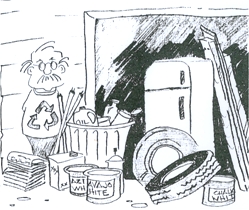
- Household and pool chemicals, paints, and poisons should be properly marked and stored under lock and key, away from children's reach. Properly dispose of any that are leaking, expired, or that look bad.
- When cleaning up hazardous chemicals, wear rubber gloves and follow the safety directions of the packaging. Never mix chemicals in the same container if you don't know how to dispose of them, seek outside advice (City of Lawrence, Household Hazardous Waste). Never put them into the trash or pour down the drain.
- Make sure gasoline and cleaning fluids are well marked and stored in a cool, dry place away from the house and out of the reach of children and pets. Use only approved containers for gasoline storage.
- Never use gasoline to clean skin, clothes, auto parts, or floors.
- Check your barbecue grill for leaks and cracks, and be sure to store any propane tanks away from your house and garage. REMEMBER: new codes PROHIBIT the use and storage of open-flame LP-gas (greater than 1 pound) or the use of charcoal barbecues on combustible (eg. wood products) balconies unless there is a sprinkler overhead.
- Remove all fire hazards, including stacks of rags, newspaper, and magazines. Pay special attention to the spaces around your furnace, hot water tank, fireplace, space heaters and dryer, as well as under the stairs.
Yard Work Safety
- Limber up. Yard chores may seem easy, but they involve muscles you probably haven't used in a while.
- Always wear protective clothing when you handle pesticides and fertilizers.
- Rake your yard before you mow to prevent any stones and loose debris from launching into the air.
- Never operate a mower in your bare feet and avoid wearing lose clothing
- When refueling your mower, make sure the engine is off and cool. Don't spill gasoline on a hot engine, and don't smoke while pouring gasoline.
- Never leave your mower operational while unattended.
- Don't use electrical mowers on wet grass.
- Wear proper eye protection when operating trimmers, lawn edgers, pruners and power saws.
- When pruning trees, be careful not to let metal ladders or trimmers come into contact with overhead wires.
- Make sure blade guards are in place on all cutting equipment
- Don't let tools get wet unless they are labeled "immersible".
- Unplug all tools when not in use.
- Make sure tools are in the "off" position before you plug it in.
- Before you do any "hands-on" weed removal, make sure you know how to identify poison ivy, sumac, oak, and similar toxic plants. Find out ahead of time how to treat the rashes they cause to reduce the irritation.
- When using a ladder, check for safe and proper placement. Be aware of any obstructions, overhead wires, electrical, cable, phone and tree branches.
Outdoor Safety
- Winter's inactive muscles can take only so much strain. Don't overdo it; build up slowly so you don't have strains that can put you out of commission for some time.
- It may look appealing, but don't wander on frozen rivers and lakes. The ice is beginning to thaw and you never know just how thin the ice really is.
- Spring's extra rain and thawing snow an cause normally safe rivers, streams, and creeks to turn treacherous. Even standing on banks can be risky as they can be undercut by rushing water and give in under your weight.
- Springtime is also severe weather time. If the skies look threatening, check to see if a storm watch or warning has been issued before you initiate outdoor activities.
- If you are already outside and thunderstorms threaten, go immediately into a building or enclosed vehicle. For tornadoes, go to the nearest safe structure, or the basement or interior first-floor room of your home. If there's no time to follow these precautions, take cover in a ditch or depression in the ground.
- See our Severe Weather Safety Page for more information.